Thursday, May 19, 2016

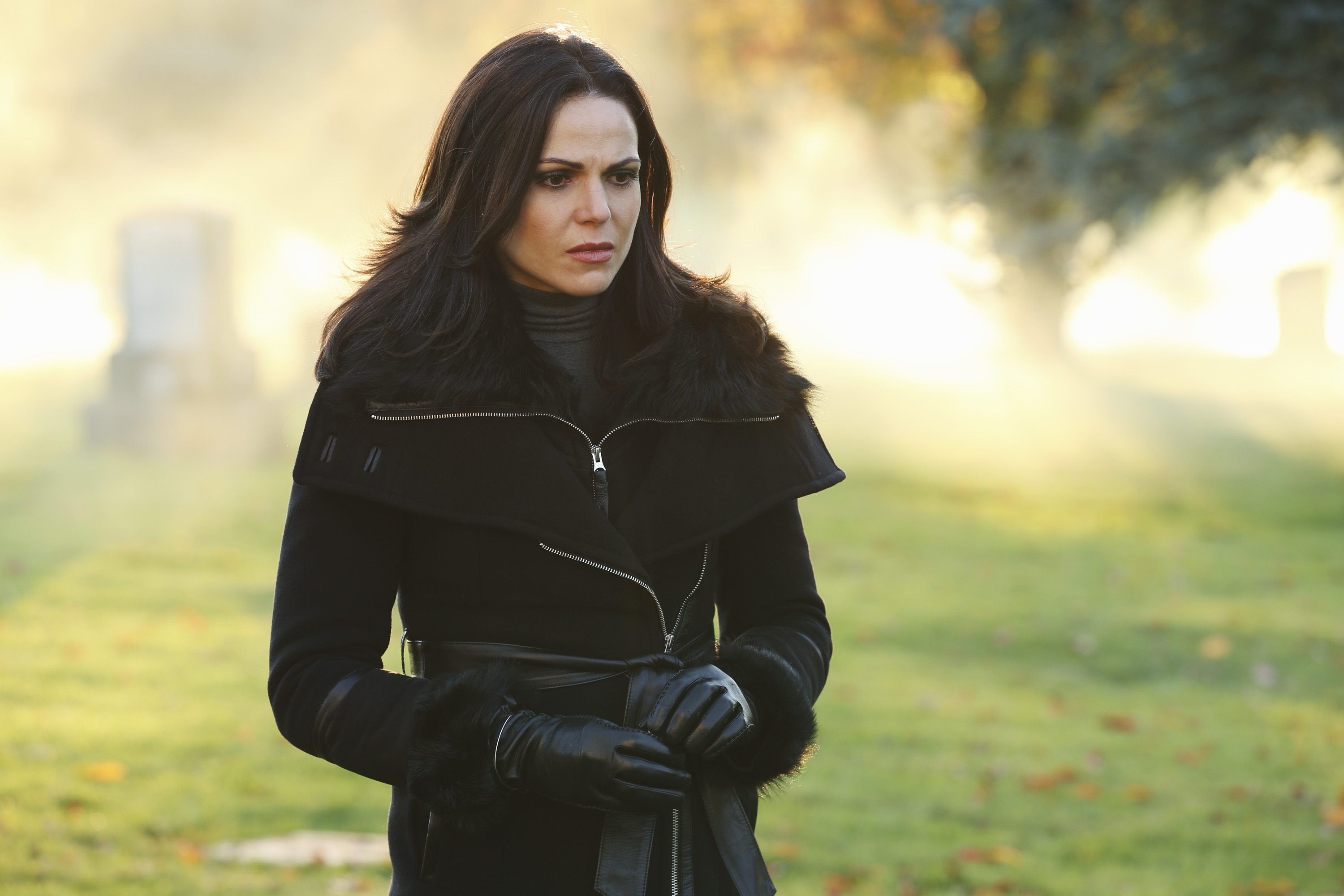
R.I.P. Season 5: Looking Forward to Better Things - My Wish for Season 6

Season 5 is finally over. Depending on how much you liked Captain Swan, King Arthur, Hades, and Zelena, you are either pleased with the season or wondering why you still watch this show. I know that I bowed out half way through, but then, like I always do, came back to see what happened after all 'cause I'm just that curious.

At first, especially during the first arc of season 5, I was certain that this show had lost its mind at last (or, at least, that now the world-wide fan base would have to acknowledge the fact that the writing didn't make sense and was getting worse). But then, as so often happens with Once Upon a Time, thinking back over the show as a whole I slowly started to realize that there was actually a great deal of potential in what had happened to the core cast of characters this season. In fact, dare I write it, I think that season 5 does make sense.

And I'm really surprised that I'm writing that. This was the season that coined phrases like "Your questions are pointless" and "Rumple's Regression," and implied that darkness (once again) is something you can actually get rid of, like literally take out of a person, somehow.

Of course there were things that didn't make sense. Of course there were! It's OUAT. There is still a superabundance of plot contrivance and deus ex machina (or, maybe I should say machina de deus -- thanks to that little god-killing crystal that came out of nowhere).

But the emotional progression of the villains (by "villains" I mean, of course, the characters who wear black, with the exception of Hook) works if you think about it as a whole. There were many questions that were answered this season, but one stands out as the most important because of how it affects the theme of the show, whether the writers know that or not.

Q: What does Rumpelstiltskin (and by extension Regina or Zelena) really want?

The preceding seasons were all kinds of confusing to us as far as Rumpelstiltskin was concerned, especially up to season 4 when Rumple suddenly decided he wanted to conquer New York, or something. Made no sense. Looking back through the lens of season 5, everything finally fits into place.

The question of season 1 was also what does Rumpelstiltskin really want (why was he helping Emma and Regina, and also backstabbing them)? The answer was magic, and when Belle asked in the season finale: Why magic? Rumple replied: "Because magic is power." Of course, the next question we pursued for two seasons was which thing does Rumple love more: Belle (family) or power (himself)? Which will he choose? Consistently he chose power, up to lying to Belle about the dagger and ruining his own marriage, and then trying to destroy the town, until all the power was sucked out of him.

Would he ever choose love over power? To the horror (but secret resignation) of many Rumbellers, the answer was inevitably "no." And accordingly Belle left him, and we were upset and also relieved, and very, very confused about what point exactly the writers were trying to make.

But was it really "no"? Because focusing on that question set up a false dichotomy that has been echoed by the last few seasons: that there is good and evil, hero and villain, light side vs. dark side. Fairy tales, if you take them literally, seem to be made of this kind of stuff. But if you take them psychologically, where the good and bad are really projections from the same mind (the witch and the princess are the same person), then you get to the kind of complexity that we have always hoped for in OUAT and that it sometimes delivers.

Focusing on whether Rumpelstiltskin (or Regina, or Zelena, or Emma) will be good or bad has left a much more interesting question unanswered: Why does Rumple want the dark power? (Why does Regina, Zelena, or Emma want dark power?) This is where season 5 really came through for us because Rumpelstiltskin finally admitted (and through him the show admitted) that he wants power because power is safety for himself and those he loves.

How did I arrive at that? Because of his explanation to Belle in 5x18. He tries to explain to her that sometimes people do "bad" things because of "good" motivations, and that you never know what you will do until you're tested. This was the first time the show admitted that love can be the motivation for evil. I mean, they'd played with it up to this point, but they hadn't committed to it in a complex way. And boy was I happy to see Belle experience this first hand. I'm not worried about her reaction, the "I just darkened my soul to save you!" nonsense. These are growing pains, and it will be especially difficult for her because she has such an idealistic view of the world. She is still trying to play by the rules of the fairy tale land they left (which were never the real rules at all) -- always do right, no matter how much it hurts you or those you love. And that is something I also believe in, by the way, but at the same time, I know that if anyone tried to harm my child, I wouldn't be responsible for my actions. This is adult knowledge -- the real knowledge of good and evil -- that we are all walking contradictions.

And this wonderfully complex contradiction finally reveals one of the core themes for most of the villains on this series. The fairy tale world, just like our world, is unfair and sometimes terrifying. Some get lucky, persevere, and get their "happy ending" (remember the words of Beagle on this topic!), and some get their only children sent off to war, are forced into arranged marriages, are abandoned as children, or fall victim to the real "monsters" -- the sociopaths. The only way to be safe in the world of OUAT is to be the scariest, most powerful monster there is. If you don't care about safety, and are willing to possibly die a horrible death, or watch your loved ones suffer, then you can be pure good. Most of the characters aren't that pure, not even Snow White. That's why we can identify with them.

So, for almost five years we've been thinking that Rumplestiltskin has been choosing power (himself) over Belle/family (love), when in reality this season revealed that by choosing power, he was choosing love. I'm not concerned with him (or anyone else) being bad or good on their own merit. Let them be "good" and bad-tempered, let them make the difficult choices, but the preoccupation with a sliding account of good and evil actions that can lighten or darken our hearts and souls is pure nonsense. There are consequences, but the idea that any of us could actually settle that account ourselves is silly.

So, I was actually pleased with the end of season 5 as far as Rumple, Regina, and Zelena were concerned. I'm not saying there aren't inconsistencies throughout, but being mature enough to admit that good vs. bad is not so simple (something that this show has always teased, sometimes even weirdly fetishized [season 4B -- yuck], but never actually committed to) was a very good move on the part of the writers. Also finally exploring the real motivations behind Rumple's quest for power in the context of his rocky marriage was good. I was, frankly, tired of seeing Rumple "going dark" because he "wants power." What does that even mean at this point, right? The only responsible reaction Belle can have to that scenario is to tell him off and leave. But that's frustrating to watch because it forces her to constantly criticize him. No one wants to watch that. At last we will see Belle's idealism get tested by reality, and I look forward to that in season 6. It's exactly what her character needs.

My wish: We've had so many cameos from the dead. It would be nice to see Belle's mother counsel either Belle or Rumpelstiltskin about the immaturity of their worldviews, and how their generation gap is affecting their marriage (idealism vs. cynicism). Maybe she could be the voice of wisdom for Belle and of hope for Rumple. Also, I like Frances O'Conner. Overall, I'd really like to see the show commit completely to the idea that there is no such thing as the dark/light side, or that these things are inextricably part of us. That motivations are complex. Keep going in this direction, writers! And stop it with the magical MacGuffins already. 

Friday, March 18, 2016

And Then There Were None: Well, Well Miss Claythorne

BBC's And Then There Were None (2015), an adaptation of Christie's famous mystery thriller, sparked my interest over the week, and I was able to watch the three-hour long miniseries over the course of a few days.

There have been many adaptations of this novel, and most of them change some facet of the original story, some more dramatically than others. If you haven't read the novel or seen any adaptations and don't want the story spoiled for you, be careful how you read on (I will try not to reveal the killer at least).

The main thing that I enjoy looking for in adaptations of Christie is how the characters will (or will not) be fleshed out and re-constituted on film. Sometimes adaptations make you sympathize with a villain in ways that the book never did, and sometimes the reverse happens and characters you felt sorry for seem much less appealing when you watch them on film.

Sometimes, too, the production clearly has a particular version of the story it wants to tell. I think that's the case with And Then There Were None (2015).

The story began and ended with Vera Claythorne, the last survivor on the island. Most adaptations tend to focus on Vera one way or another, so this is not surprising. Vera's viewpoint is the most emphasized throughout the novel. Vera is also the character who seems most sympathetic for the audience. She's young, female, and modest. We feel sorry for her. She seems vulnerable. In some versions, that's exactly what Vera really is. These are the versions that usually don't keep the original ending. Christie herself rewrote the story for the stage and made Vera (and Lombard) more likable.

Well, she had to. No one wants to sympathize with a heartless murderer, after all.

But that's the question that's always been at the heart of the novel, and the one that this production really did not hesitate to embrace fully: Who is capable of murder? And if we all are, then who is really innocent? And what does it mean to be innocent or guilty? Who judges? Who executes?

In this version, unlike past versions, there was no redemption romance between Vera and Philip Lombard. I say "redemption" because by giving them a romance (and allowing them to survive), most versions of the film end up white washing the two characters' crimes, like having Vera be innocent after all (her guilt is the most difficult to substantiate) or having the Philip Lombard's friend (who is innocent of Lombard's crimes) pose as Lombard. After all, we can't sympathize with two killers in love, can we?

Or maybe we can. Or maybe a killer can't love. Whatever the case, Christie didn't feel the need to answer those questions, and in not answering them I think she created something really interesting. More interesting than her usual puzzles. She created a story in which the audience is confronted with uncertainty and confusion regarding characters' true natures and emotions. In which we are, in other words, confronted with reality.

The way the film told the stories of the murderers/victims in flashbacks that lacked narration or any real framing was a superb way to unfold the uncertainty of who these people really were and what motivated them. Especially Vera.

I knew Vera's story already, but even so I could see how a first time viewer would be drawn to the real mystery, not of who is killing these people, but whether Vera Claythorne (and the others) are really killers at heart and what that means, since they are also complex human beings with common impulses that we all share.

We are also strongly encouraged to root for Lombard and Vera to get together (boy, do they) and to survive (no comment). What is brilliant is that even at the very end, when Vera has shot Lombard and is choking in the noose that she put her own head in (literally), we are completely uncertain if there is anything redeeming about Vera. Did she really love Hugo? Did she love Lombard? Did she love anyone but herself?

And the surprising answer is that it seems like Vera's biggest priority was always her own survival at the expense of someone else. Ruthlessly she sells out Lombard if it will get her head out of the hangman's noose (but it can't, of course). Any romance that we could have imagined between them is destroyed in a few words. We get to see that this person we thought might have been different really isn't. Is possibly the worst of them all.

Why? Because along the way the others have their opportunities to confess and make peace with their past crimes. And many of them, surprisingly I guess, actually do. This is why it's very interesting that Blore points out that he thinks they might already be dead and are now in hell. He's shocked and upset, but it's a really apt metaphor that helps us understand the emotional arc of the story. Which is basically that you have ten people who, more or less, at some point decided that another human life was less important than their own and now they are experiencing the same thing -- their punishment or just reward. It drives some of them to real repentence, I think. Others it breaks down completely. And a few, like Lombard and Vera (and maybe Marston would have gone the same way), aren't going to play by the rules. They want to survive above everything else and are unwilling to accept the consequences, that they've been out-played.

Ironically, Lombard is the most honest of the bunch - he readily admits his guilt early on and acknowledges that he's always known "it would catch up with [him]." But he isn't ready to die just yet. It takes the others a bit longer to come to terms with their pasts, but eventually McArthur, Blore, Armstrong, and even Wargrave to a certain extent admit that they might have been wrong in what they did. There is some kind of release in confession for them, even though they still die.

Vera never confesses. The closest she gets is allowing "Cyril" to take her to her scheduled appointment with death (see what I did there?). And in the novel, that is Vera's confession and admission of guilt. But in the film, due to certain problems in adapting the ending, it isn't. Vera is still unrepentent. This is harsh because she's also the audience's pov character. In a typical Christie, Vera would be the murderer -- she has the emotional arc that Christie so often described (probably best in Death on the Nile); the character who is least suspected, very sympathetic, and utterly unrepentant because taking another human life has robbed her of her own humanity.

It makes her the least sympathetic in the end. At least to me. And I thought that was a very bold move.

Overall I think the miniseries film is a very good adaptation, but a very, very dark one. Darker, perhaps, even than Christie might have meant it to be.


Friday, February 19, 2016

What Happened to Once Upon a Time? Looking back at 5 years worth of my Sunday evenings.

A lot of fans (but certainly not all) are wondering at the end of Season 5A, What exactly happened to this show?

Some people (like those at TVline and other sites) will tell you whatever it is has been happening for a while, and I think they're right. Others probably think that the problems they are seeing are relatively new and are worth pushing through (like the folks at Once Upon a Fan, bless them).

I'm with those who blame the writing. It's sloppy and silly. But the show at least had a strongish first season -- most fans can agree on that. So, I'm going to look back at the four and half seasons we've had so far to find the forest in the trees: the overall structure of the show and how it's changed in five years. Maybe we can find some hints for what's been causing all the fuss.

Friday, January 22, 2016

What's Wrong with Female "Chosen Ones"? A Lot, Apparently.

Having recently re-read through some young adult fiction and finished Marissa Meyer's latest and final installment in the Lunar Chronicles, I was struck by a troubling realization. I realized that one of the things I had disliked about Winter (a book that I liked, overall), and most of the quartet of books, was the abortive attempts of the heroine to actively engage in fighting the enemy because she is consistently burdened by feelings of guilt about the people who are sacrificing themselves for her sake.

In fact, in general, I am appalled at how often female main characters, especially "chosen ones," become crippled by their emotions in the middle of crucial situations. Most common is survivor's guilt. A close second is flat out despair. Almost always it will overwhelm her, whereas her male counterpart deals with the guilt in some active and useful way (note, I did NOT say "healthy" way).

I'm sure that this sense of survivor's guilt is entirely realistic. Having recently read back over other examples of war fiction, like Tim O'Brien's "The Things They Carried," I found the concept of survivor's guilt in a war situation a fairly straightforward and accurate psychological burden. Most "savior" or "chosen one" characters in settings that involve an ongoing war experience survivor's guilt. But what seemed a bit strange to me was how much more writers seem to emphasize survivor's guilt in stories with female protagonists and how they portray this guilt as crippling, versus how guilt is dealt with in stories with male protagonists.

For example, in the Harry Potter series, Harry is portrayed as fairly sensitive to survivor's guilt. In some ways it drives him to make the final sacrifices that he does toward the end of the series. (Sort of a "no one else must die for me.") But Harry rarely seems to be crippled by this guilt; it keeps him going forward. There is an understanding in the HP series that casualties are an inevitable and terrible cost of war. We all sobbed with Harry over the deaths of Sirius, Fred, Dobby, and even Snape (RIP Alan Rickman). But these casualties strengthened the heroes' resolve to see it through to the end. The love they felt for their friends, and the grief they endured, became a source of emotional endurance.

In the WOT series, Rand also has tremendous guilt, especially over all of the women who died for him (thanks, Rand), and obsessively remembers their names. But he channels this guilt (pun intended) into anger and revenge for them. Not healthy, for sure, but at least he's doing something.

Contrast this with what happens to Cinder in The Lunar Chronicles. Cinder discovers that she's the long lost moon princess, Selene (hello, Marissa, this is Naoko Takeuchi calling, and she wants her story back! JK). The rest of the series is about her attempt to overthrow her evil aunt, the current monarch of the moon. Along the way several sympathetic characters die or are severely wounded helping Cinder, and we spend pages on Cinder's anguish over these sacrifices for her sake. It's very understandable for her to feel this guilt, but what isn't proper is for it to disable her from positive action. Cinder berates herself at every turn; she isn't worth other people's sacrifices. In the middle of battle, when people are dying around her, she stands helpless (a cyborg with magical telepathy, mind you) because she can't deal with the guilt. And I have to ask myself: Why is Cinder crippled by survivor's guilt and feelings of extreme unworthiness, when, in a similar situation, Harry Potter, Rand, and Neo just switch into terminator mode?

Granted, it's only Cinder who thinks herself unworthy; that's not necessarily what the audience thinks. But it's still pretty damaging to be obliged to follow a protagonist who just shuts down because she can't get over the terrible guilt of others dying for her sake during a war.

I am tempted to think that this is a similar theme in The Hunger Games series, but it's been a while since I last read those books. I know that Katniss eventually becomes unable to deal with everything that has happened to her, and I think this is an attempt on Collins' part to realistically portray PTSD. That makes sense to me. But it also makes me wonder why I'm not finding such a realistic portrayal of a male in fantasy and dystopian fiction. Rand comes close sometimes, but then, he's Rand. Maybe I just haven't read enough.

Are heroines in fictional war stories more emotionally fragile than their male counterparts? Are they fundamentally unable to deal with the casualties and grief of war? Or is there an underlying cultural belief lurking in the murky corners of these stories that would embarrass us if we brought it into the light? Namely that women aren't really worthy or capable military leaders, possibly because of their emotions, but also possibly just because they're women.

 Sometimes the way these characters berate themselves seems ludicrously apologetic. As if the heroines are saying: "I know that I'm not worth dying for. In fact, I and my cause are so unworthy that I will be rendered completely useless by the entirely appropriate guilt and anguish I feel at your willing sacrifices. Your deaths are my fault." Logically, we know that Cinder can't be faulted for Dr. Darnel's death or for Wolf's continued torture. These were adults who willingly and knowingly put themselves in extreme danger for a cause they believed in that happened to include her. But all we get out of Cinder is a lot of self-hate. And that's not good or helpful. In fact, it implies that women, or at least, Cinder, is more responsible or culpable for the well-being of others than any normal (male) human being could be. Again, Rand could be a male model here, but he's also crazy. And he feels guilty about women...which... I just can't.

When Harry blames himself for Sirius' death, there is at least a more specific reason for this than his simply being the chosen one. It is possible to realize that, in some ways, it is Harry's fault. This is part of Harry growing up. And he deals with this guilt actively, channeling it into anger. It's not the best response, but it is active, not passive. Harry doesn't sit in his room for months and then go cliff diving.

Perhaps the Divergent series is different? I'm not sure. I haven't read it. I will say that I think Sabriel and Lirael of the Abhorsen trilolgy seem to suffer from this problem a little less, and also older fantasy like Robin McKinley. Perhaps Robert Jordan can pass because he's purposefully setting his books in patriarchal worlds...I guess. I'm sure there must be others. Maybe some one can point me in the right direction?


Sunday, January 10, 2016

Those Pesky Unanswered Questions

It's a new year, and I've resolved to turn over a new leaf by becoming a more responsible blogger. In other words, I'm going to start blogging more regularly (and responding more regularly) to your comments. I started this blog because I needed an outlet for my thoughts on OUAT and other things, but since the Timeline (which was a group effort) and the MBTI post have been modestly popular, I want to make an effort to write about things that interest others too. (Isn't that unselfish of me?)

Today I'm focusing on the unanswered questions of the show. Those pesky little questions, some of them with us since the first season. Some of these questions arise from the events of the show itself, while others only really jump out at you when you start trying to put everything together (like the Timeline).

So here we go. And of course if you have theories, answers, or other questions I haven't covered here, please comment!

Let's begin!